
Among the Sensex firms, State Bank of India, Infosys, Titan, Tech Mahindra, IndusInd Bank, NTPC, ICICI Bank, Power Grid, Reliance Industries and Kotak Mahindra Bank were the major laggards. On the other hand, Tata Motors, Nestle, Hindustan Unilever, Tata Steel, Bajaj Finance and UltraTech Cement were among the gainers.

Among the Sensex firms, ITC, State Bank of India, Bajaj Finance, NTPC, Power Grid, ICICI Bank, Kotak Mahindra Bank and UltraTech Cement were the major laggards. IndusInd Bank, Tata Consultancy Services, Axis Bank, Mahindra & Mahindra, Tata Motors, HCL Technologies, Asian Paints, Wipro, HDFC and Maruti were among the major gainers.

Risks emerging from the US have left automotive investors worried. US President Donald Trump has announced 25 per cent tariffs on automotive imports, while global electric carmaker Tesla has taken its first steps towards entering India. While these developments are sentimentally negative for related stocks, it may be too early to conclude the eventual impact, analysts said.

Information technology (IT) stocks ended at their lowest in nearly nine months after a fresh bout of selling, triggered by concerns over a recession in the US, the key market for domestic software exporters. A report by Morgan Stanley citing risks to growth also weighed on sentiment.

Equity mutual funds witnessed a remarkable surge in inflows to nearly Rs 4 lakh crore in 2024, more than double the amount recorded in the preceding year, reflecting strong investor confidence and a continued shift towards long-term investing, particularly through Systematic Investment Plans (SIPs).

Facing criticism from the government over the central bank prioritising inflation over growth, the new RBI Governor Sanjay Malhotra on Monday said that prospects of the Indian economy are expected to improve on the back of high consumer and business confidence in 2025. "As we strive to preserve financial stability to support a higher growth path for the Indian economy, our focus remains steadfast on maintaining stability of financial institutions and, more broadly, systemic stability," Malhotra said in foreword to the Financial Stability Report.

Domestic rating agency Icra on Monday upped its banking sector outlook to 'positive' on healthy asset growth, improving asset quality and stronger capital buffers. The agency expects asset quality to improve to a decadal best of 4 per cent from a gross non-performing assets (NPAs) perspective by the end of FY24. The banking system's credit growth will slow down to 11-11.6 per cent in FY24, after a very healthy growth of 15.2-16.1 per cent expected in FY23, the rating agency said.

Have the markets already played out their dynamics before the economy has even properly taken off? Are we now destined for a period of mediocre returns despite a strong economy? asks Akash Prakash.

IT services firm Wipro's revenue is likely to increase by about 4.5 per cent in FY26, mainly driven by favourable sectoral trends and recovery in discretionary customer spending, according to global rating agency Fitch.
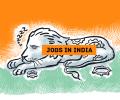
The encouraging news, however, is that India features among the top four countries out of 44 nations that projected a positive hiring trend.

Younger investors with long investment horizons may continue their SIPs.

Gold prices slumped for the second straight session by Rs 1,150 to Rs 78,350 per 10 grams in the national capital on Monday on frantic selling by stockists and retailers, the All India Sarafa Association said. The precious metal of 99.9 per cent purity closed at Rs 79,500 per 10 grams on Friday.

The volume of new fund offerings (NFOs) in 2025 will fluctuate based on market conditions. However, innovation is expected to continue unabated. With an increasing number of fund houses aiming to establish a presence in the 'factor' investing space and changes in fund-of-fund taxation providing more opportunities, several industry-first offerings are anticipated.

Tata Motors' 2022-23 (FY23) January-March quarter (fourth quarter, or Q4) results were better than Street estimates, with strong showing across Jaguar Land Rover (JLR), as well as commercial and passenger vehicle businesses in the domestic market. The company posted its highest consolidated top line and operating profit, with growth of 35 per cent and 46.5 per cent, respectively, over the year-ago quarter. While the top line was aided by a 49 per cent growth in the JLR unit, all key segments reported margin expansion.

The meltdown in Dalal Street that wiped out investor wealth to the tune of 44 trillion in 2025 also seems to be having a ripple effect on the country's vibrant automobile retail sales.

Expect heightened volatility and stress to hit the markets. Caution may be the need of the hour, alerts Akash Prakash.

ABB India's March quarter results (Q1CY24) were led by strong margin performance. Revenue was, however, largely in line with estimates at Rs 3,080 crore (up 28 per cent Y-o-Y and up 12 per cent Q-o-Q). The growth was across electrification (30 per cent Y-o-Y), process automation (73 per cent Y-o-Y) and robotics & motion (8 per cent Y-o-Y).

The rupee tumbled 3 per cent against the US dollar in 2024 as concerns over slower economic growth and a stronger greenback in global markets weighed, but it was among the least volatile currencies in the world and the headwinds may be less intense in the coming year.

India's largest asset manager SBI Funds Management on Tuesday said they are negative on equities from a shorter-term perspective as valuations have risen above the comfort zone. "We are not positive on equities. We think valuations are expensive. "The market has gone up a lot more than the earnings have grown," said R Srinivasan, Chief Investment Officer (CIO) - Equity at SBI Mutual Fund, at the launch of asset management companies' (AMC) yearly report on the market outlook.

India has secured the second position, contributing 36 per cent of the total brand value, a significant achievement fuelled by a 14 per cent increase in brand value, according to Brand Finance 2025 ranking. India follows the US, which maintains its dominant position in IT services brand value, holding 40 per cent of the total brand value.
The Reserve Bank has told the International Monetary Fund (IMF) that the objective of frequent interventions in the forex market is to curb excessive volatility, dismissing the Fund's rationale for reclassifying India's exchange rate regime. The IMF, following the Article IV consultation with the Indian authorities, reclassified the status of the exchange rate regime to "stabilised arrangement" from "floating" for period between December 2022 to October 2023. India's Executive Director at IMF K V Subramanian and Senior Advisors Sanjay Kumar Hansda and Anand Singh questioned the selection period adopted by the Fund for analysis and also reclassification of the country's exchange rate regime.

The FMCG industry hopes for a revival in consumption growth in 2025 with some 'green shoots' already visible, after having a challenging year amid escalating input costs and a double-digit rise in food inflation, which ultimately slowed down the pace of the urban market growth in the second half of 2024. Soaring prices of commodities such as palm oil, coffee, cocoa and wheat forced FMCG players to go for a hike of 3 to 5 per cent or resort to shrinkflation by reducing pack sizes and grammage to retain attractive price points, fearing a volume loss.

Among the Sensex firms, IndusInd Bank, Maruti, Titan, Reliance Industries, NTPC, Mahindra & Mahindra, Larsen & Toubro, Kotak Mahindra Bank and HDFC Bank were the major laggards. UltraTech Cement, JSW Steel, Axis Bank, Tata Consultancy Services, Wipro and ITC were the major gainers.

Zomato emerged as the biggest gainer, followed by Reliance, Nestle, Asian Paints and Power Grid.
The RBI on Wednesday slashed key interest rate by 25 basis points, for the second time in a row, to support a shuttering economy hit by reciprocal tariffs imposed by the US. Following the rate cut, the key policy rate eased to 6 per cent providing relief to home, auto and corporate loan borrowers.

India's healthcare and pharmaceutical sectors raised Rs 14,811 crore through initial public offerings (IPOs) in 2024, the largest since 2019, driven by strong domestic demand amid expanding global opportunities. According to data, key contributors to the record fundraising included Sai Life Sciences (Rs 3,043 crore), IKS Health (Rs 2,498 crore), and Sagility India (Rs 2,107 crore).

'The market should maintain optimism on the back of range-bound oil prices, a robust fiscal balance sheet, a better-than-expected monsoon, and moderating inflation.'

Despite a gloomy macroeconomic environment, 2009 is unlikely to be as bad as the previous year.

Most market analysts are expecting the momentum to shift towards 'quality' and 'growth' stocks in 2024 after the outperformance of 'value' stocks over the past three years. 'Value' stocks are generally well-established companies with steady profits that are trading at a discount to what they are intrinsically worth. Companies in sectors such as commodities, industrials, commercial vehicles and public sector units (PSUs) fall in this bracket.

Private consumption is back driven by festive spending, and the medium-term economic outlook remains bullish as the innate strength of the macro-fundamentals reasserts itself, the Reserve Bank Bulletin said on Wednesday. Global economic activity remained resilient during Q4:2024 amidst fragile confidence and rising protectionism, said an article on 'State of the Economy' published in the November Bulletin.

Disappointing quarterly earnings numbers and revenue forecast from IT services company Wipro also weighed on investor sentiments. The 30-share BSE Sensex fell 247.78 points or 0.38 per cent to settle at 65,629.24 points. During the day, it plunged 533.52 points or 0.80 per cent to 65,343.50 points.

Info Edge (India) reported good Q2FY24 results with hiring across other segments helping offset weak IT performance. The revenue increased 11.5 per cent year-on-year (Y-o-Y) to Rs 593 crore, (up 1.5 per cent quarter-on-quarter or Q-o-Q). The earnings before interest, taxes, depreciation, and amortization (Ebitda) margin was excellent at 40.7 per cent, up 200 basis points year-on-year (Y-o-Y).

Kotak Mahindra Bank was the biggest loser in the Sensex pack, sliding 2.68 per cent, followed by Tech Mahindra, Mahindra & Mahindra, Axis Bank, Hindustan Unilever, Tata Motors, Tata Consultancy Services, Bajaj Finserv, Bajaj Finance, Nestle and Titan. In contrast, NTPC, Power Grid, Larsen & Toubro, HDFC, Reliance and HDFC Bank were the gainers.

'This market for diesel starts at around Rs 6.3 lakh and goes up to Rs 7 lakh, and with Saathi we have our usual price set at Rs 6.5 lakh, so we are slightly on the lower side with a superior product.'

After registering a net profit of Rs 25.1 crore in Q3FY25 and consolidated revenues growing by 7 per cent on a like-for-like basis, Siddharth Mittal, chief executive officer (CEO) and managing director, Biocon, told Sohini Das/Business Standard in a virtual interaction that local manufacturing in the US is a trade off between cost and qualifying to do business there.

Automobile retail sales in India declined 9 per cent year-on-year in September amid a massive buildup of passenger vehicle inventory due to sluggish demand, dealer's body FADA said on Monday, urging original equipment manufacturers to take corrective steps. The overall registrations declined to 17,23,330 units last month from 18,99,192 units in September 2023, as most of the categories including passenger vehicles and two-wheelers witnessed a year-on-year (Y-O-Y) drop.

Some major contracts coming up for renewal include TCS' deals with Star Alliance, a consortium of airlines based in Germany, and Nielsen; Infosys' deals with GE Appliances and Daimler; HCLTech's with UK-based life insurer Chesnara; Wipro's with German electric utility company E.ON and Petrobras of Brazil; and Tech Mahindra's with Circle Health.

Sluggish urban demand, a high base effect, and weak sales of hatchbacks and sedans weigh down passenger vehicle sales in FY25.
